
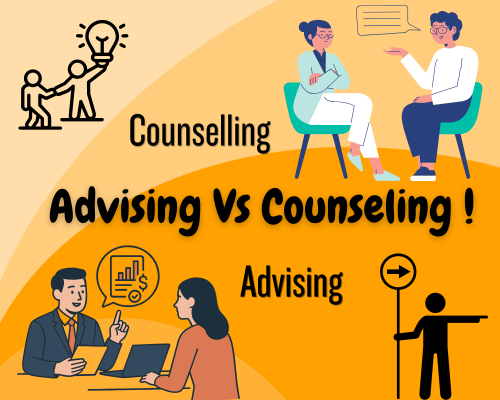
You might think advising and counselling are the same thing. In fact, most people use these terms interchangeably without giving it much thought, but they actually serve very different purposes..
There is little difference in the way approach works:
- Advising involves providing a direct recommendation on what someone should do when they ask for guidance.
- Counselling is a deeper, ongoing intervention where a person partners with an expert to achieve long-term growth and healing.
People usually seek advice for short-term problems or when they are struggling to make a decision. Often, the person asking already has specific options or preferences in mind. The advisor’s role is to evaluate these choices and provide an informed recommendation on the best path forward.
Counselling is a collaborative, two-way conversation designed to bring clarity to complex challenges. Often, the issues we face are ambiguous or clouded by external influences and personal confusion. Whether you are navigating a career transition or addressing mental health concerns like stress, anxiety, or overwhelm, a counsellor provides a safe space to untangle your thoughts and find a clear path forward.
For example, major decisions regarding career choices, long-term professional growth, or selecting a specific field and institution of study are better addressed through career counselling rather than simple advising. While an advisor might tell a student which classes to take next semester, a counsellor helps the individual explore their underlying strengths, values, and long-term aspirations to make a sustainable life choice.
Ultimately, these words are interchangeable in casual contexts, as long as there is a clear understanding of the actual process involved.
Hopefully, this short guide helps you better navigate and understand the unique processes behind these two simple words.
-Hiren Thaker
Career Counsellor & Advisor